

House Passes FY26 NDAA with Major Hampton Roads and Shipbuilding Priorities Secured by Kiggans
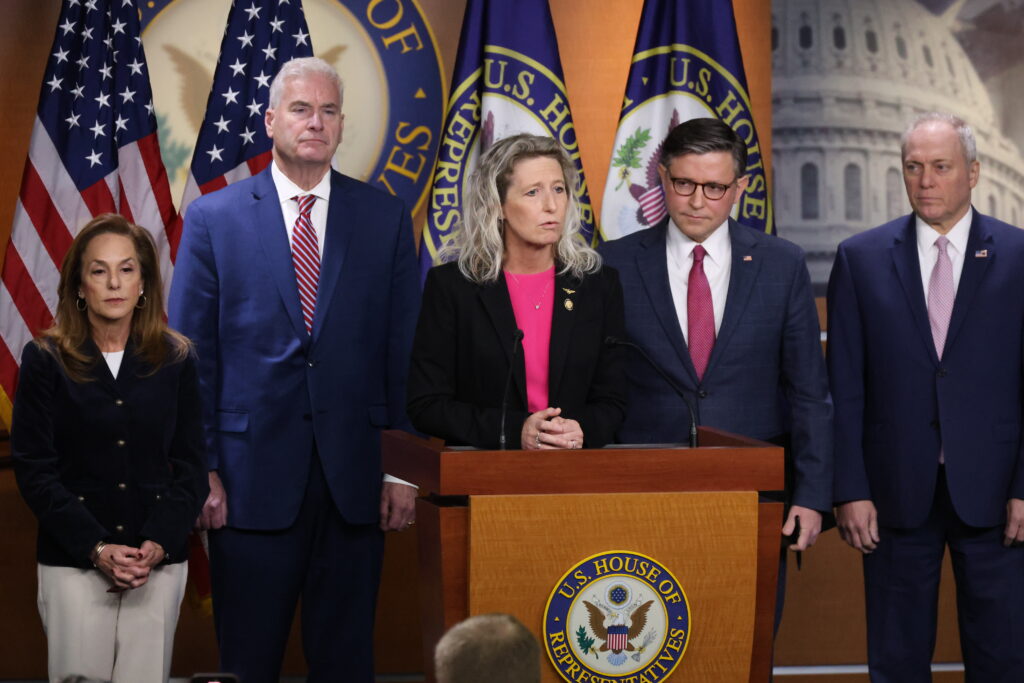
Watch Rep. Kiggans’ speech at the Leadership press conference here.
Washington, D.C. — Today, the House passed the National Defense Authorization Act for Fiscal Year 2026. As a member of the House Armed Services Committee, Congresswoman Jen Kiggans (VA-02) secured a number of wins for military families, shipyard workers, and Hampton Roads.
The FY26 NDAA authorizes $900.6 billion for national defense discretionary programs, strengthening America’s military while saving taxpayers nearly $20 billion through targeted cuts to wasteful spending and bureaucracy. It fully carries out President Trump’s “Peace Through Strength” agenda by rebuilding readiness, revitalizing the defense industrial base, securing the border, and improving quality of life for servicemembers and their families.
“Today’s legislation is a major win for our Armed Forces and for the men and women who risk their lives every day for our freedom,” said Congresswoman Kiggans. “This NDAA makes our military more ready, more capable, and more lethal—while finally delivering the quality-of-life improvements our servicemembers and their families deserve.”
“As a Navy veteran, Navy spouse, and Navy mom, I am especially proud that this bill supports a 3.8% pay raise for our troops, invests over $1.5 billion in new housing, nearly $500 million in childcare centers, and more than $335 million to improve military hospitals and clinics,” Kiggans continued. “It strengthens TRICARE, improves mental health access, boosts childcare assistance, and helps military kids succeed in school.”
“This NDAA also delivers on our commitment to ‘Peace Through Strength’ by investing $26 billion in shipbuilding; over $25 billion to rebuild our munitions stockpiles; and more than $145 billion in cutting-edge research and development—including hypersonics, AI, unmanned systems, and new space capabilities,” she added. “It removes China from our supply chains, supports Israel’s security, secures our southern border, and makes sure our allies pay more for their own defense.”
“I came to Congress on a mission to rebuild our Navy, revitalize our shipyards, and take care of our all-volunteer force,” Kiggans concluded. “This bill moves us decisively in that direction. It strengthens our industrial base, advances American shipbuilding, and improves day-to-day life for our servicemembers and their families—especially those stationed in Hampton Roads and across coastal Virginia. As a third-generation veteran, I will always be the loudest voice for our military men and women in Congress.”
Watch Rep. Kiggans speak on the House Floor in favor of the NDAA here.
Watch Rep. Kiggans’ interview with Wavy10 on the House NDAA here and her interview with 13News Now here.
Read Rep. Kiggans’ press release on the House-passed NDAA here.
Highlights of this legislation are included but not limited to:
Implementing President Trump’s Peace Through Strength Agenda
- Authorizes $900.6 billion in total national defense discretionary spending while saving nearly $20 billion through targeted cuts to wasteful climate programs, duplicative bureaucracy, inefficient contracts, and obsolete platforms.
- Codifies all or parts of 15 of President Trump’s national security executive orders—including those restoring America’s fighting force, ending wasteful DEI programs, securing the border, modernizing defense acquisitions, deploying advanced nuclear energy, and unleashing American drone dominance.
- Fully supports President Trump’s priority programs, including the Golden Dome missile defense initiative, next-generation fighter aircraft, submarines, warships, advanced munitions, and autonomous systems.
Improving Quality of Life for Servicemembers and Civilian Mariners
- Supports a 3.8% pay raise for all servicemembers, reauthorizes and expands bonuses and special pays, increases Family Separation Allowance, and expands convalescent leave.
- Authorizes over $1.5 billion for new construction of barracks and family housing, requires a plan to meet health and safety obligations in military housing, and strengthens oversight of privatized housing providers.
- Authorizes more than $335 million to renovate military hospitals and build new medical facilities, prevents reductions in uniformed medical billets, improves specialty-care travel reimbursement (lowering the mileage threshold from 100 to 75 miles), and expands cooperation with civilian healthcare systems.
- Authorizes over $491 million to design and build new childcare centers, extends the Child Care in Your Home pilot, and starts a pilot to increase childcare assistance in high-cost areas.
- Invests more than $206 million to build new schools for military children, protects DoD schools from sudden closure, expands Impact Aid (including an additional $20 million for schools serving children with severe disabilities), allows Guard and Reserve families to enroll in DoD schools when activated, and permits schools to limit or ban student cell phone use.
- Strengthens the Transition Assistance Program (TAP) by allowing retiring servicemembers to immediately move into careers in the defense industrial base and medical professions, establishing a spouse-focused transition pilot, and improving metrics to ensure servicemembers get timely access to resources.
- Enhances military recruiting by extending enlistment bonuses, requiring uniform medical accession standards, improving recruiter access to schools, expanding JROTC units, and authorizing bonuses for hard-to-fill JROTC instructor positions.
- Strengthens the Military Sealift Command workforce by eliminating pay caps for civil-service mariners and expanding commissary and MWR access, improving retention and supporting the readiness of the Navy’s global logistics fleet.
Strengthening Shipbuilding, Readiness & the Defense Industrial Base
- Authorizes $26 billion in shipbuilding funding, including: the third Columbia-class ballistic missile submarine and advanced procurement for future submarines; one Virginia-class submarine plus advance procurement; advance procurement for future DDG-51 destroyers; full funding for the Ford-class aircraft carrier program; one anti-submarine warfare auxiliary ship; and two Ship-to-Shore Connector landing craft.
- Invests over $25 billion to rebuild U.S. munitions stockpiles, including procurement of precision strike missiles, JAGMs, Naval Strike Missiles, Javelins, Stingers, Tomahawks, GMLRS, AMRAAMs, LRASMs, advanced anti-radiation missiles, JDAMs, MK-48 torpedoes, and artillery rounds.
- Authorizes more than $145.7 billion for research, development, testing, and evaluation—including hypersonics, artificial intelligence, quantum computing, autonomous platforms, directed-energy systems, and space-based capabilities.
- Expands the use of the Defense Industrial Base Fund to invest in critical mineral mining and refining, demands multi-year procurement for high-demand munitions, and directs DoD to streamline qualification of advanced manufacturing methods like 3D printing.
- Requires DoD to identify and remove regulatory barriers that discourage maintaining surge capacity, creates new forums to tackle parts obsolescence and supply-chain fragility, and launches a program to mature robotic automation for munitions manufacturing.
- Strengthens the maritime and shipyard industrial base through military construction reforms—allowing accelerated and progressive design-build, expanded use of Other Transaction Authority (OTA) for complex projects, and enhanced Navy contracting flexibility for major shipyard modernization efforts.
Reforming Acquisition to Deliver for the Warfighter
- Implements major elements of the “SPEED Act” to streamline acquisitions, creating a new accelerated requirements process focused on rapid, innovative solutions instead of slow, bespoke systems.
- Centralizes program management under a portfolio acquisition executive to speed decisions, and requires early life-cycle sustainment planning to avoid long-term readiness gaps.
- Puts commercial solutions first by requiring DoD to look to commercial off-the-shelf capabilities before launching expensive new development programs, removing burdensome compliance requirements for small businesses, and easing use of subscription services like commercial satellites.
- Establishes the BOOST program within the Defense Innovation Unit to bridge the “Valley of Death” and transition promising technologies into operational use.
- Modernizes Cost Accounting Standards implementation, eases regulatory burdens on smaller programs, and strengthens the acquisition workforce through improved training, public-private exchanges, and new pathways from the Defense Civilian Training Corps into civil service.
Ready, Capable, and Lethal Fighting Force
- Improves readiness by mandating at least 90 days’ worth of F-35 parts by FY2028, ensuring amphibious ships receive a fair share of maintenance funding, investing in depot and arsenal capacity, and launching AI pilots to improve ground-vehicle maintenance.
- Protects critical capabilities by prohibiting retirement of key aircraft fleets, accelerating Virginia-class submarine construction, and providing multi-year procurement authority for UH-60 Blackhawks.
- Enhances force protection and counter-drone authorities, establishes a new interagency task force to coordinate counter-UAS efforts, and strengthens protection of nuclear facilities from unmanned aerial threats.
- Advances energy independence on military installations by codifying President Trump’s advanced nuclear energy initiatives, directing a program of record for military micro-reactors, and requiring a Navy pilot for small modular or mobile reactors.
This comprehensive legislation strengthens our military from the flight line to the shipyard, from the border to the Indo-Pacific, while delivering real, measurable improvements in the lives of servicemembers and their families—especially those serving, living, and working in Hampton Roads.